
Start dates
Fall (Sept), Winter (Jan), Spring (April), Summer (July)
Program length
3 months
Credits
Nine
Program delivery
On-campus, Online
Prepare for graduate studies in Canada
Get a feel for student life at University of Niagara Falls Canada while taking academic bridging courses to better prepare you for master's studies.
Applicants seeking admission to graduate programs at UNF who fall slightly below the entry requirements for their program of choice may be eligible after completing three academic bridging courses.
These academic bridging courses provide applicants a pathway to improve their grades and prepare for successful admission to a master’s program at UNF. It also gives them an opportunity to familiarize themselves with the academic environment and expectations at UNF, allowing them to smoothly transition into the master’s program of their choice.
Choosing on-campus delivery means students attend classes in-person, allowing them to experience campus life and engage with faculty and peers in face-to-face classroom setting. This format is beneficial for those seeking to familiarize themselves with UNF’s environment, the downtown Niagara Falls campus and community, build connections, and leverage in-person opportunities to participate in events held at the campus.

Study options
On-campus
Location
All on-campus programs are delivered at the University of Niagara Falls Canada campus in downtown Niagara Falls. Students attend in-person classes, access labs, collaborate with peers, and engage directly with faculty. Certain programs include specialized equipment and lab components, which are provided by the university.
Schedule
These academic bridging courses are delivered in 2+2 model currently. This means for each course, students spend two hours studying the materials made available to them on the learning management system on a weekly basis. This prepares the student for the upcoming two hours, per course, they will spend in class with their faculty and peers engaging in team-based exercises that requires critical thinking, problem solving, and active application of the course concepts.
Timeline
These academic bridging courses need to be completed during one term, delivered over a 12-week period.
Course content
Each course will have a syllabus that will be made available at the start of the term, it will outline all required projects, assignments, quizzes, and exams.
Participation
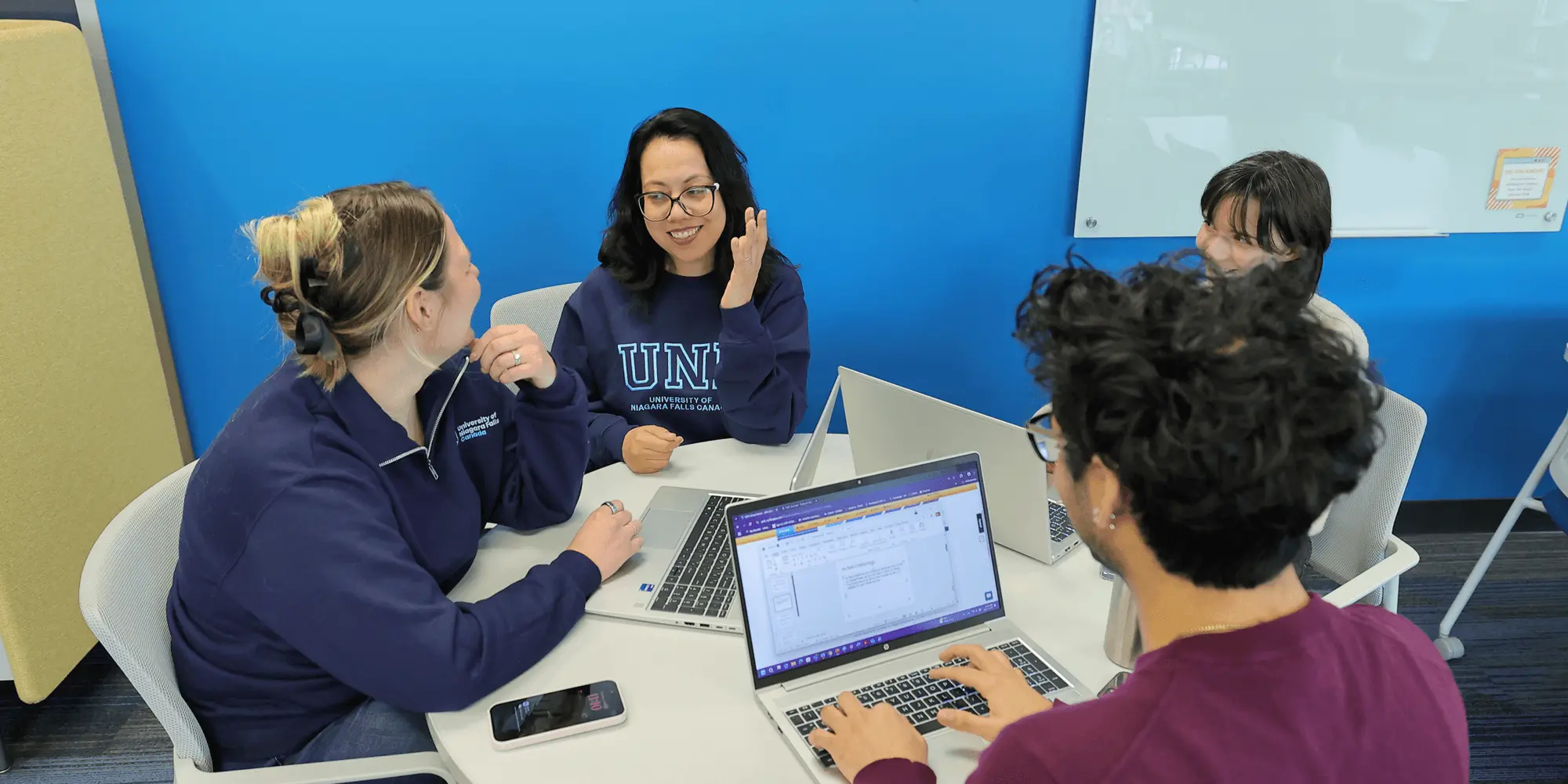
On-campus learning is highly interactive. Students engage through discussions, group projects, presentations, and applied challenges. Collaboration is central, approximately a 60/40 split between individual and group assessments is typical. Students also meet with instructors during scheduled classes and can arrange additional meetings as needed. Faculty integrate real-world tools, AI applications, analytics platforms, and industry-focused technologies into classroom activities.
Assessments
While individual courses vary, depending on the subject matter and instructor, students can expect a mix of quizzes, exams, presentations, case studies, projects, and applied assignments. Undergraduate programs generally include more quizzes and exams, while graduate programs emphasize applied work such as projects, research, and capstones. Assessment weights vary by course, typically ranging from five to 50 percent per component.
Flipped classroom
GFP classes use the flipped classroom method, where students complete all the course readings prior to attending the class, and the classroom time is used to create active engagement of the learner with the course concepts. This method puts the learner at the center of the learning process and is more engaging in comparison to the traditional lecture style of teaching.
Delivery modes
These academic bridging courses are currently offered in two modalities, on-campus and online. The information on this page refers to the on-campus delivery. To learn more about the online program, visit the Graduate Foundation Program online page.
Online
Location
This is a fully online program. You can complete your coursework from anywhere.
Schedule
There will be no scheduled classes. Asynchronous learning means you can study at your own pace. All course materials will be made available at the start of term, except for exams and quizzes.
Timeline
Weeks 1-10: You will be able to access your course content online and complete tasks throughout this period.
Weeks 11-12: You will need to complete any review activities and final assessments, including exams and final projects.
Course content
Each course will have a syllabus as well as additional course materials that will be made available at the start of the term, except for exams and quizzes.
Participation
While components vary depending on the individual course, you can expect to use discussion forums and group chat platforms, participate in videoconferences, as well as utilize project management tools. There will be group assignments in addition to individual assignments.
Course highlights
The Graduate Foundation Program is completed over the course of one term and includes three academic bridging courses, chosen from a list of courses offered that term. Some courses are mandatory, while others can be chosen based on availability.
Digital Business Fundamentals
Business is one of the fundamental units of society. Students will study the management and operation of business, including the principles, concepts, ideas, and tools used by managers. The emphasis will be on management in the digital world of high technology. Students will explore the intersection of technology and business, gaining insights into how digital innovations are transforming traditional business models and practices. They will also examine typical business functions and the role of managers in production, marketing, human resources, accounting and finance in a digital Canadian context including a consideration of Canadian business law and ethics. This course will give students a foundational understanding of key concepts such as e-commerce, the impact of technology on business models, ethics in the digital age, and futuristic emerging technologies.
Leadership and Management
Students will gain an understanding of the difference between leadership and management. They will examine effective business leadership models across the workplace. By comparing effective and ineffective leadership, they will derive leadership styles, strengths, and attitudes; Individually, students will conduct an inventory of their own leadership styles, strengths and areas needing development. Students will apply leadership theories, models, and practices in authentic scenarios. As well, they will utilize planning strategies to lead others to achieve common goals, and apply leadership strategies to develop, motivate, engage, and lead effective teams. In preparation for entry into the business world, students will examine best practices in starting in a new supervisory role in the workplace.
Business Statistics
Students will learn statistical concepts, methods and procedures used in business, including descriptive statistics–graphics and numerical presentations, data analysis, data generation, probability theory, sampling, estimation, hypothesis testing and linear regression. Students will use statistical software applications throughout the course.
Required for entry to Master of Data Analytics.
International Business
In a digitized environment, Canadian business professionals must have a sound understanding of the global business environment. Students will develop a broad understanding of the global marketplace and the essential elements of international business. Students will learn the principles and practice of international business and factors impacting business operation and management in the rapidly changing global business environment. Students will examine basic international trading blocs, trade patterns, trade rules, international trade treaties and the foreign exchange market. Through case studies, students will explore the impacts of culture and the economic, legal and ethical systems on international business.
Admission requirements for the Graduate Foundation Program

Academic information
Applicants must meet the following minimum conditions for admission:
Bachelor’s degree: Completion of a recognized undergraduate degree equivalent to the four-year honours degree standard with a minimum 2.67 GPA and meet the English language proficiency requirements.
Application process
Applicants seeking admission to graduate programs at UNF who do not meet the entrance requirements for that program will be notified if they are eligible for these academic bridging courses. Applicants cannot apply directly to the GFP.
Tuition information
Choosing to pursue a university education is a big commitment that impacts every aspect of your life – including your finances. Our fees are determined by the total cost of individual credits per academic year. All fees are listed in Canadian dollars and these rates are subject to change.

GFP Refund Guarantee
UNF has introduced a GFP Refund Guarantee for eligible international students.
Eligibility
International students who have been admitted into a master's program at the University of Niagara Falls Canada and are required to complete the Graduate Foundation Program (GFP) online before beginning their graduate-level courses, may be eligible for a full refund through the GFP Refund Guarantee should they meet the qualifying conditions:
- Started the GFP online program in the 2026 Winter, Spring, Summer, or Fall intake
- Received a study permit refusal from Immigration, Refugees, and Citizenship Canada (IRCC) within nine months of their GFP term start date
- The refusal was not due to fraudulent documentation or applicant misrepresentation
- Submitted a copy of their visa refusal letter to UNF within 10 business days of receiving it
- Successfully completed the GFP online, meeting the required 3.00 CGPA to progress to their master’s studies
- Students may retake a course or courses within the program if required, but fees paid for course retakes are not refundable
This guarantee is not applicable to students enrolled in the on-campus delivery of the program.
Students who voluntarily withdraw, defer, or choose not to proceed with visa application processes are not eligible for the GFP Refund Guarantee.
Hear from our Associate Professor
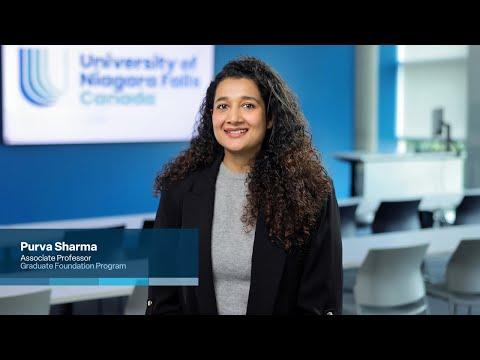

This program offers an opportunity to strengthen their academic credentials and prepare for the advanced studies.

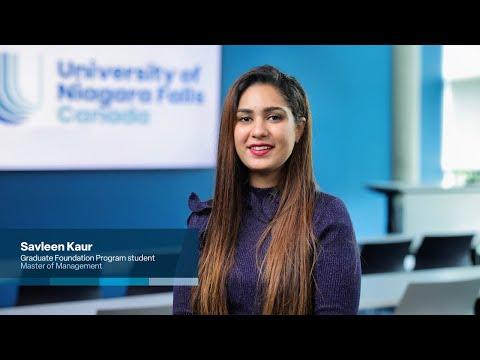
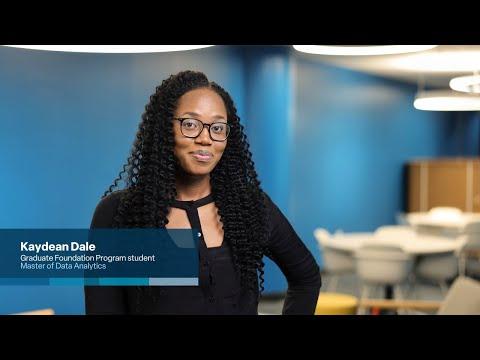
Student Testimonials
Frequently asked questions
On-campus
What are academic bridging courses?
Academic bridging courses are designed to help students bridge the gap between their current credentials and the specific requirements for admission into their program of choice.
What will the average week look like for Graduate Foundation Program (GFP) students?
Students will have two hours of classes per subject, each week.
What is the timeline for progression into a master’s program?
After successful completion of these academic bridging courses, you can begin your master’s program. We aim to issue unconditional offers immediately after grades are received from the academic areas at the end of the term.
What are the assessment methods for the GFP?
Students are assessed using a variety of methods such as case studies, projects, reports, presentations, discussions, quizzes, exams etc. The assessments are spread out throughout the term to give students the opportunity of ongoing feedback, improving retention, encouraging consistent effort, and encouraging participation.
How does a student successfully transition to graduate studies?
Students are required to take three undergraduate courses of three credits each, for a total of nine credits . They are required to obtain a GPA of 3.0 to successfully complete the program and transition to their respective master’s program.
Will students receive a certificate upon completion of the GFP?
Since the GFP is not an accredited program, it does not provide a formal credential upon completion, nor is it noted on the transcript as a completed program—only the individual academic bridging courses completed are listed.
What is the payment plan and timeline for the GFP?
Students can choose to pay for their GFP studies first before paying their academic deposit, but it is recommended to pay the required deposit to ensure their space in the program.
Will students receive a full refund for the master’s program if they are unsuccessful in the GFP?
Yes, students will qualify for a refund of unused monies on their student account, subject to the terms and conditions of our refund policy.
If a student fails the GFP, can they redo the unit they failed or must they retake the whole program?
The program consists of three individual courses. Students are allowed to retake any course they did not successfully complete, up to four times, in accordance with academic policies. However, according to the tuition refund guarantee terms and conditions, while course retakes are permitted, the tuition for the retaken course will not be refunded.
Online
Will the modules for Graduate Foundation Program (GFP) online be asynchronous?
Yes, the modules will run asynchronously, allowing you to complete them at your own pace within the given time frame.
What is the timeline for progression into a master’s program?
After successful completion of these academic bridging courses, you can begin your master’s program. We aim to issue unconditional offers immediately after grades are received from the academic areas at the end of the term.
What are the assessment methods for the GFP?
You are assessed using a variety of methods such as case studies, projects, reports, presentations, discussions, quizzes, exams etc. The assessments are spread out throughout the term to give you the opportunity of receiving ongoing feedback, improving retention, encouraging consistent effort, and encouraging participation.
How do I successfully transition to graduate studies?
You are required to take three undergraduate courses of three credits each, for a total of nine credits. You must obtain a GPA of 3.0 to successfully complete the program and transition to your respective master’s program.
Will I receive a certificate upon completion of the GFP?
Since the GFP is not an accredited program, it does not provide a formal credential upon completion, nor is it noted on the transcript as a completed program—only the individual academic bridging courses completed are listed.
What is the payment plan and timeline for the GFP?
You can choose to pay for your GFP studies first before paying your academic deposit, but it is recommended to pay the required deposit to ensure your space in the academic bridging courses.
Will I receive a full refund for the master’s program if I am unsuccessful in the GFP?
Yes, you will qualify for a refund of unused monies on your student account, subject to the terms and conditions of our refund policy.
If I fail the GFP, can I redo the unit I failed or must I retake the whole program?
The program consists of three individual academic bridging courses. You are allowed to retake any course you did not successfully complete, up to four times, in accordance with academic policies. However, according to the tuition refund guarantee terms and conditions, while course retakes are permitted, the tuition for the retaken course will not be refunded.
What are the timelines for the online program?
The GFP online is asynchronous, meaning you are expected to review course content, participate in learning activities, and complete assignments on the learning management system weekly at your own pace. Additionally, there are scheduled office hours with faculty twice during the term where you can meet virtually to ask questions or seek clarifications. You can also book additional office hours by emailing faculty, if needed.
Will I receive a full refund if I am unsuccessful in obtaining a study permit?
If you started the Graduate Foundation Program online from outside Canada in any 2026 intake and are unsuccessful in obtaining a study permit within nine months of the term start of your online studies, you will be eligible for a full refund through the GFP Refund Guarantee Program, provided you meet these conditions:
- You submit your student visa refusal letter within 10 business days of refusal receipt
- The study permit refusal is not due to the submission of fraudulent documents or applicant misrepresentation
- You’ve successfully completed the Graduate Foundation Program online.
Please note that while course retakes within the Graduate Foundation Program online are permitted, the tuition for any course retake will not be refunded.
For more information, contact studentaccounts@unfc.ca.
